What to pack for Antarctica: the definitive list made by those who truly know it
Antarctica doesn't forgive improvised gear. Unlike other destinations where you can "just buy it there," on the white continent there are no stores, no pharmacy, and no second chance to upgrade your equipment. What you bring from Buenos Aires or Ushuaia is what you have.
This list was built from the experience of guiding and preparing thousands of travelers who passed through Buenos Aires on their way to Antarctica. It's not the catalog list of an outdoor store: it's the real list, with what works and what doesn't.
The three-layer rule: base, mid, and outer
Antarctic cold isn't fought with a thick jacket. It's fought with the layering system: each layer has a specific function, and the right combination keeps you comfortable between -5°C and -25°C depending on conditions.
Base layer (against the skin): thermoregulation
The base layer is the most important and the most underrated. Its job is to wick moisture away from the body (sweat) without letting the cold in. Recommended materials: merino wool or technical polyester. Never cotton: cotton absorbs moisture and becomes a cold trap.
Bring at least 3 complete sets (top and bottom): one on, one drying, and one clean. In Antarctica, clothes don't dry quickly and laundry access is limited on smaller ships.
Mid layer (over the base): insulation
The mid layer traps the warm air generated by your body and keeps it close to the skin. The best options are 200- or 300-gram fleece, or a compressible down layer. The advantage of fleece is that it works even when damp; down loses effectiveness when it gets wet.
Bring two mid-layer options so you can combine them according to the day's temperature. Zodiac landings can be considerably colder than the day aboard the ship.
Outer layer (windproof / waterproof): protection
The waterproof jacket and pants are the most expensive item on the list and the one most worth investing in. In Antarctica it rains, snows, there's sea spray on zodiac landings, and the wind can be extreme. A quality technical shell (GORE-TEX or similar) is essential. Most cruise companies require passengers to have a certified waterproof jacket for landings.
Some cruises include a waterproof jacket loan. Check with your operator before buying. If it's not included, renting in Ushuaia is a cheaper option than buying.
Accessories: the ones that make the difference
Footwear
Tall waterproof boots (Wellington-style or similar): they're essential for zodiac landings, where you step into water up to your knee. Most cruises lend them. If your cruise doesn't include them, it's better to rent them in Ushuaia than to carry them from Buenos Aires.
Trekking boots: for the walks on land. They should be waterproof and have good soles for volcanic or snowy terrain.
Gloves, hat, and neck gaiter
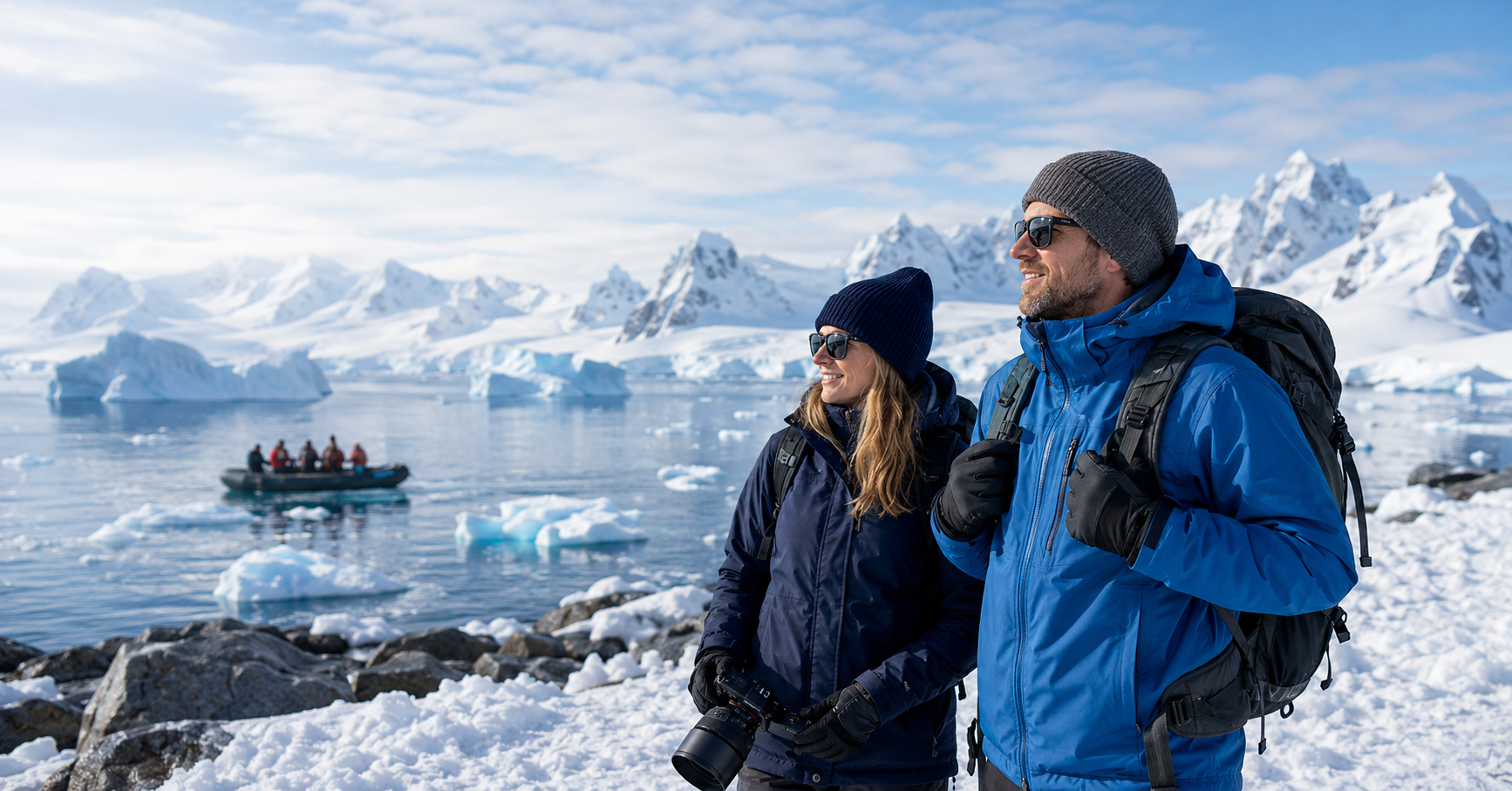
Bring two pairs of gloves: thin ones (for handling the camera and doing things with your hands) and thick waterproof ones (for landings in extreme cold). The wool or fleece hat should cover your ears. The buff or fleece neck gaiter is possibly the most useful accessory on the whole list: it warms your neck, mouth, and nose without taking your hands out.
Sunglasses with high UV protection
The reflection of the sun off Antarctic ice and snow creates extreme UV radiation. Quality sunglasses with UV400 protection are essential, not optional. Glacier-style glasses (with side protection) are the most recommended.
SPF 50+ sunscreen
As contradictory as it sounds, sunburn in Antarctica is one of the most common problems among tourists. The hole in the ozone layer over the South Pole significantly amplifies UV radiation. Bring SPF 50+ sunscreen and reapply it every 2 hours during landings.
Technology and electronics
An extra portable battery (power bank): outlets on the ship are limited and shared. A 20,000 mAh battery gives you full autonomy for your camera, phone, and other devices during the busiest days.
Extra memory cards for the camera: you'll take more photos than you think. In Antarctica, a penguin colony of 100,000 individuals is a spectacle you'll want to capture in full.
A waterproof camera or waterproof case: zodiac landings and sea-spray conditions can damage a conventional camera. A waterproof case is a small investment that can save your gear.
What to buy in Buenos Aires vs. what to buy in Ushuaia
In Buenos Aires you'll find: base- and second-layer thermal underwear at better prices than in Ushuaia, medications (especially for motion sickness, altitude, and colds), alfajores and snacks for the trip, and any electronic accessory or camera-gear spare part.
In Ushuaia you'll find: rentals of Wellington boots and waterproof jackets if your cruise doesn't include them, warm clothing from specialized brands (Patagonia, The North Face, and Helly Hansen have their own stores), and unique local souvenirs of the far south.
What you do NOT need to bring
Formal or dressy clothing: on expedition cruises the dress code is casual and functional. The only exception is the captain's dinner, for which clean, presentable clothing is enough.
Large amounts of cash: in Antarctica there's nothing to buy. On the ship you pay by card. In Ushuaia there are ATMs.
Lots of extra luggage: domestic flights to Ushuaia have strict baggage limits (usually 23 kg checked). Pack smart.
If you have questions about the specific gear for your cruise, write to us before you travel. At DePasseios we can guide you during your layover in Buenos Aires, and at OnlyPatagonia we know the specific conditions for the time of year you're traveling. At no extra cost for those who have already booked one of our tours.
OnlyPatagonia
DePasseios: your guide during the Buenos Aires layover · OnlyPatagonia: your specialist in Argentina's far south